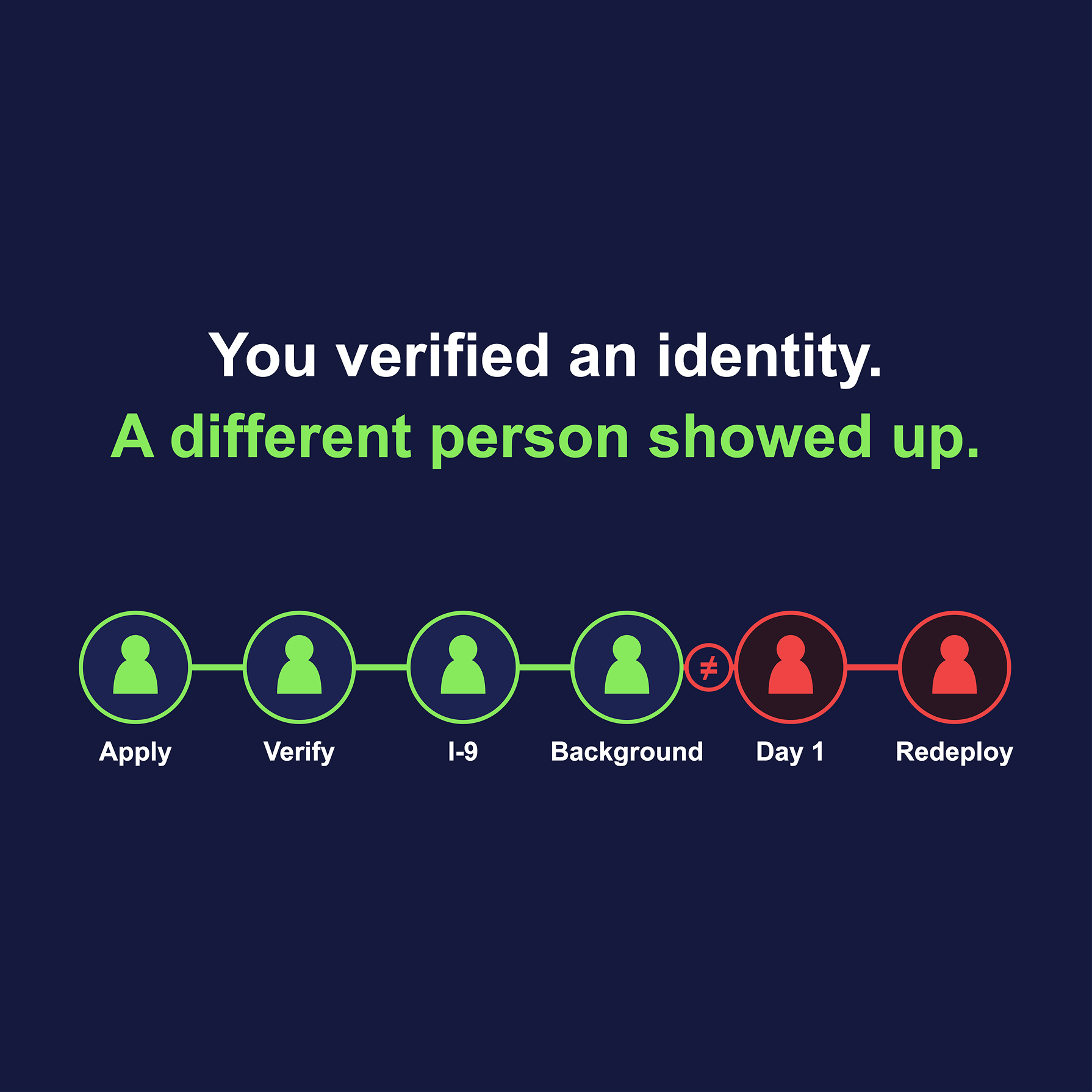
Fraud Lives in the Gaps, Not at the Front Door
Identity fraud in high-volume hiring is rarely a single, isolated event, such as a forged ID handed over at the front door. Instead, it is a persistent vulnerability that exploits the gaps between different stages of the hiring and onboarding lifecycle.
When verification is treated as a one-time checkpoint, organizations miss the subtle shifts that occur after that check is completed. A swapped bank account, a physical substitution on the first shift, or a previously flagged worker returning under a new alias will easily bypass a static defense. Managing this risk effectively requires mapping how identity threats mutate at each operational stage.
Application and Intake
Fraud begins before any formal verification takes place. At the intake stage, the primary threats are synthetic identities (profiles stitched together from a mix of real and fabricated data), duplicate applications from a single actor, and resumes engineered to bypass automated screening logic.
Because the applicant record is completely new, there is no historical baseline to compare it against. Fraud at this stage is usually detected through aggregate patterns rather than individual anomalies, such as multiple profiles sharing the same device, IP address, or bank routing information. A single application rarely looks suspicious on the surface; the volume and repetition are what reveal the fraud.
Identity and Document Verification
This stage involves the physical or digital review of credentials. Vulnerabilities here include forged documents, altered details, or the presentation of a legitimate credential that belongs to someone else.
The operational trap is treating a successful verification as a permanent clearance. Confirming a document is valid today does not guarantee the person who submitted it will be the same individual who completes onboarding or shows up for the shift. Verification is a point-in-time snapshot, while fraud is a continuous threat.
I-9 and Work Authorization
Work authorization introduces specific compliance risks, including forged documents and missed filing deadlines. In high-volume environments, the most insidious threat at this stage is data drift.
If the name, date of birth, or identification number captured during intake differs slightly from the I-9 data, it is often dismissed as an administrative typo. But these small discrepancies increase risks of government audits on your E-Verify process and frequently mask deliberate identity swapping between workflow steps.
Background Checks
Every background check rests on one assumption: the identity being screened belongs to the person you're hiring. If someone presents a different identity before the check runs, the check runs on the wrong person. The result comes back clean, and it tells you nothing about who actually shows up to work. The check did its job, it just did it on the wrong identity.
Direct Deposit
Payment details are a primary target for financial fraud. Common indicators include routing wages to an account that does not belong to the named worker, or a single bank account receiving direct deposits for multiple distinct worker profiles.
The latter pattern strongly suggests a single actor or fraud ring is collecting pay for several identities. Because identity documents are rarely re-verified at the payroll stage, this fraud often goes unnoticed until the funds have already moved.
Day 1 and Shift Confirmation
This is the stage with the highest rate of physical substitution, yet it is rarely subjected to secondary verification. A bad actor may successfully navigate the application, verification, and background check stages perfectly, only to send a different, unvetted individual to the actual job site.
In distributed staffing environments where the placing firm is separated from the client site, this operational blind spot is frequently exploited and carries major risk for jobs with strict compliance rules.
Redeployment
Redeployment fraud involves repeat offenders who were previously terminated or flagged for policy violations that attempt to secure a new placement using a modified alias or fresh identity record. Without cross-record deduplication, the system treats the known liability as a brand-new applicant, granting them a clean slate. The higher the placement volume, the easier it is for a flagged individual to blend back into the applicant pool.
Why a Single Front-Door Check Fails
Analyzing these stages reveals that workforce identity fraud clusters at the exact moments when administrative scrutiny drops: post-onboarding, right before the first shift, and during redeployment. Verifying an identity only during week one leaves the system blind to the risks that peak later in the lifecycle.
Securing this entire lifecycle requires a fundamental shift to Workforce Fraud Prevention. Instead of relying on a single front-door check, Workforce Fraud Prevention treats risk management as a continuous framework. Identity must be established at intake, but critical attributes must be re-verified at high-risk junctures, specifically shift confirmation, Day 1 check-ins, and redeployment. This does not require adding friction to every step for every worker; it requires surfacing cross-stage discrepancies so a reviewer can investigate anomalies while legitimate workers proceed seamlessly.
Onboarded facilitates Workforce Fraud Prevention for high-volume employers, enabling identity re-checks at critical vulnerability points, including shift confirmation, Day 1, and redeployment. By surfacing actionable signals across the lifecycle, the platform ensures identity fraud prevention continues even as risk profiles shift.
See how it works.
Frequently Asked Questions
Workforce identity fraud is the deliberate misrepresentation of a worker's identity during the hiring, onboarding, or employment lifecycle. Tactics include using synthetic identities, forging documents, swapping identities between workflow steps, misdirecting payroll, physical substitution on the first day, or returning under an alias after being flagged.
Workforce Fraud Prevention is a lifecycle-wide strategy that treats identity verification as an ongoing process rather than a point-in-time check. It involves monitoring for cross-record anomalies (such as shared bank accounts, devices, or backgrounds) across all operational stages and ensuring systemic discrepancies are flagged for human review.
While it occurs across the lifecycle, fraud concentrates where verification typically ceases: after onboarding, immediately before the first shift, and during redeployment. These gaps allow the person on record and the person performing the work to diverge.
A background check only evaluates the history of the provided identity; it cannot confirm that the identity actually belongs to the person who applied or who will show up to work.If an identity swap occurs prior to the check, the employer simply verifies the wrong person.